Incense Burn Time Revealed: Science, History & Optimization Guide | Monian
Incense Burn Time Revealed: Science, History & Optimization Guide
The burn time of incense is not an accident. It is a product of deliberate engineering, centuries of cultural refinement, and material science—designed to transform the passage of time into a tool for managing your inner state.
What's Inside This Guide
This is a functional manual on the engineering of time through scent. We will explore the diverse forms of incense and their burn characteristics, the historical origins of the 21cm standard as an ancient clock, the science of combustion that governs burn rate, and practical strategies to optimize your ritual.
Have you ever lit a stick of incense, watched the smoke curl upward, and wondered: how long will this last? Beyond the fragrance, the burn time of incense is a fascinating convergence of science, design, and centuries of practical application. From ancient temples to modern homes, incense has served not only as a companion of fragrance but also as a precise, subtle timekeeper.
This is not just about pleasant aromas. It is about understanding the intricate engineering behind every stick and cone. Let us explore what determines burn time, and why some incense is designed for a quick burst of scent while others are meant to release fragrance for hours.
Part 1: The World of Incense Forms
Incense comes in a remarkable variety of forms, each crafted for specific burn characteristics and experiences. The fundamental structure plays a crucial role in its lifespan. Understanding these forms is the first step to choosing the right tool for your needs.

Coreless Stick Incense (Joss Sticks)
This elegant form of stick incense is common in Chinese and Japanese incense traditions. It is made entirely from compressed incense powder and natural binders, with no bamboo core. The absence of a core allows for a more even burn and a purer scent profile, as there is no wood competing with the fragrance.
- Standard Chinese Incense (21 cm): The classic form, typically burning for approximately 45 minutes. This burn time has significant historical importance, which we will explore below.
- Japanese Kodo Incense: High-quality coreless sticks typically burn for 30 to 50 minutes, prized for their refined, subtle scent.
- Short Sticks (10-15 cm): Ideal for a quick session, burning for 10 to 25 minutes.
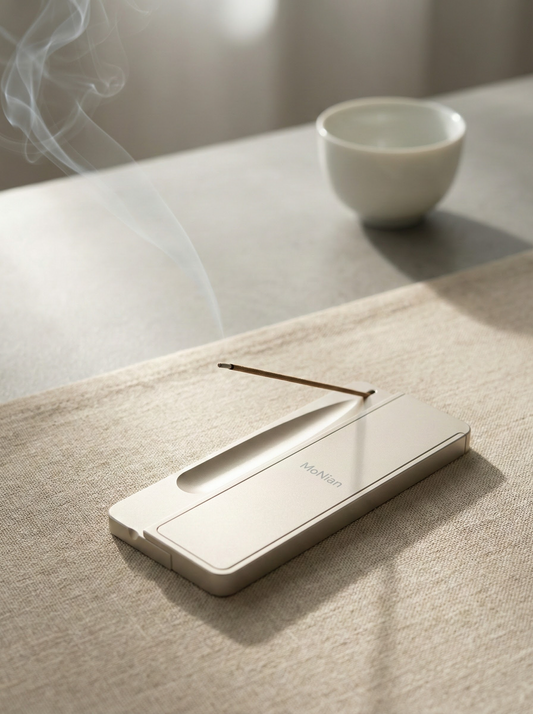
Monian's stick incense collection uses this coreless structure, designed to deliver a clean, undiluted olfactory experience.
Bamboo-Core Incense (Masala / Indian Style)
Characterized by a thin bamboo stick at its center, coated with a fragrant paste. The bamboo core burns along with the incense body, which can slightly alter the scent but often extends the burn time.
- Indian Masala Incense: Generally burns for 25 to 40 minutes.
Cone Incense
This compact, cone-shaped form is designed for a fast, intense release of fragrance. The burn surface area increases as the cone burns down, filling a space with scent quickly. They typically burn for around 20 minutes. A notable variant is the backflow cone, which produces a mesmerizing downward smoke flow, like a waterfall. This visual effect is achieved through a hollow channel inside the cone and a specially designed burner.
Coil Incense (Spiral Incense)
These spiral-shaped forms are engineered for extended burning. Depending on their size, burn times can range from 1 hour to a full day, with some extra-large coils lasting up to a month. They are ideal for creating a sustained ambient fragrance in a space.
Incense Wands (Tibetan Style)
Thicker than standard sticks, Tibetan incense wands are often made from a blend of herbs, woods, and minerals. They produce a more robust, earthy smoke and can burn for 50 to 70 minutes or longer.
Extra-Long Sticks
For those who need a long-lasting fragrance, sticks over 50 cm can burn for several hours. Some sticks exceeding 60 cm can sustain a burn for 2 hours or more.
Other Traditional Forms
Beyond the common forms, incense exists in many other traditional shapes, each with its own purpose:
- Wood Chips (Agarwood, Sandalwood): Raw aromatic wood, heated on charcoal or an electric burner. The scent release depends on heat, not combustion, offering a purer, more controllable experience.
- Powder Incense: Loose powder used for "incense seals" or "incense trails," where the powder is pressed into a pattern and lit at one end. Burn time depends on the length and complexity of the trail.
- Incense Pellets (Nerikoh): A traditional Japanese form. A "dough" of resins, woods, spices, honey, and dried fruit is kneaded together and rolled into small pellets. They are heated, not burned, releasing a subtle, complex fragrance.
- Resin Incense (Frankincense, Myrrh): Raw tree resin, burned on charcoal. The burn time is variable, depending on the size of the resin piece and the heat of the charcoal.
Part 2: Burn Time at a Glance
The following table provides a quick reference for typical burn times across different incense forms.
| Incense Type | Typical Length/Size | Typical Burn Time | Key Characteristics |
|---|---|---|---|
| Coreless Stick (Standard Chinese) | 21 cm | ~45 minutes | Even burn, pure scent, historical timekeeping use |
| Coreless Stick (Japanese Kodo) | Varies | 30-50 minutes | High quality, refined fragrance |
| Short Stick (Japanese, Tibetan) | 10-15 cm | 10-25 minutes | Quick session, ideal for short rituals |
| Bamboo-Core Stick (Indian Masala) | Varies | 25-40 minutes | Bamboo core present, may slightly alter scent |
| Cone Incense | Cone shape | ~20 minutes | Fast ignition, intense fragrance release |
| Coil Incense | Spiral shape | 1 hour to 1 month | Extended burn, sustained ambient fragrance |
| Long Stick | 25-30 cm | 50-70 minutes | Longer burn time |
| Extra-Long Stick | 50 cm+ / 60 cm+ | Several hours (2+ hours for 60cm+) | Extremely long burn, for extended use |
Part 3: The Engineering Behind the Burn
The specific dimensions and shapes of incense products are not arbitrary. They are the result of centuries of practical evolution and an empirical understanding of how materials combust.
The 21 cm Standard: An Ancient Clock
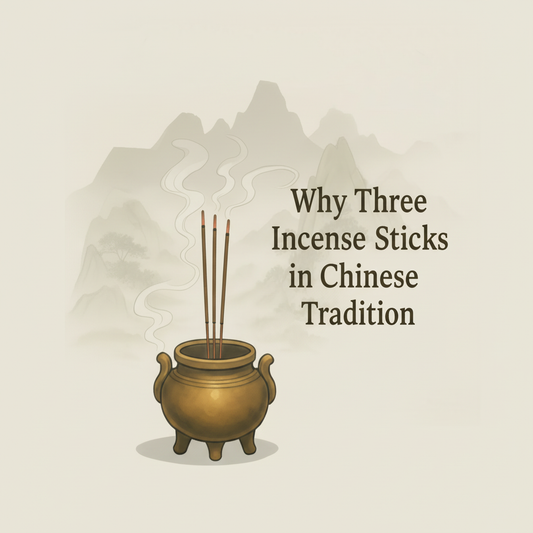
A standard Chinese incense stick is 21 cm long and burns for approximately 45 minutes. This is not a coincidence. Historically, this precise burn time was used as an "incense clock" for timekeeping, a practice dating back to the 6th century AD. Phrases like "the time it takes to burn one stick of incense" were common in ancient Chinese texts to denote a specific passage of time. Monks, for example, relied on these sticks to time their meditation sessions, which required a stable and predictable burn rate.
This standardization was not just about consistency; it also aligned with traditional Chinese units of measurement. 21 cm is equivalent to 7 cun (Chinese inches). In ancient Chinese culture, certain lengths were considered "auspicious" or "most auspicious" based on tools like the Lu Ban ruler (a carpenter's measuring tool). Seven cun was regarded as the "most auspicious" measurement in China, suggesting that a cultural preference for lucky dimensions influenced the practical standardization of incense. This fascinating blend of practicality and cultural significance makes incense a historically significant technological artifact, a testament to ancient ingenuity in time management long before mechanical clocks.
The Cone's Concentrated Power: Fast Fragrance Release
Cone incense, with its compact, conical shape, is designed for efficient, rapid fragrance release.
- Concentrated Ignition: The cone design, burning from the tip downward, concentrates heat and combustion at a smaller initial point. This allows for quick ignition and a fast, intense release of aromatic compounds.
- Instant Atmosphere: This concentrated burn quickly fills a space with scent, making cones ideal for situations requiring an immediate aromatic impact or a quick change in atmosphere, such as freshening a small room or briefly setting a mood. They are also effective at quickly neutralizing odors.
The cone design is a deliberate engineering choice to optimize the speed and intensity of fragrance diffusion, rather than extending burn time. This distinct design concept sets cone incense apart from longer-burning stick or coil forms, catering to users with specific needs for rapid scent dispersal.
Part 4: The Invisible Forces
Beyond inherent design, several other factors subtly (or not so subtly) influence burn time.
A. Physical Dimensions
- Length: As noted, longer sticks contain more material and thus burn longer. This is a direct correlation.
- Thickness: Thicker sticks contain more combustible material per unit of length and generally burn longer than thinner ones, given similar composition and environmental conditions.
B. Material Composition and Quality
The raw materials and how they are processed are critical.
- Natural vs. Synthetic: High-quality natural incense (e.g., made from pure sandalwood or agarwood) burns steadily and evenly with minimal smoke. In contrast, synthetic or heavily processed incense may burn unevenly and emit an artificial scent, indicating issues with its chemical composition or production process.
- Binder Content: The proportion of binder (such as wood powder) in the incense mixture significantly affects burn rate. Higher binder content generally leads to a slower burn, as binders are less flammable than the fragrant materials themselves. However, this can also result in more ash.
- Purity of Ingredients: Freedom from impurities ensures a consistent, stable burn. Adulterants, such as common wood powder, can cause uneven burning and an unpleasant "burnt" smell.
C. Environmental Conditions
Your surroundings play a surprisingly significant role.
- Ventilation: Oxygen is fuel for combustion. In a well-ventilated area, increased oxygen supply accelerates burning. Conversely, in a poorly ventilated space, reduced oxygen slows the burn. However, excessive airflow can cause uneven burning or premature extinguishing.
- Humidity: Moisture in the air, or moisture absorbed by the incense, affects combustion. A humid environment can cause incense to absorb moisture, which absorbs heat and slows the burn. Storing incense in a dry, sealed container is crucial for maintaining its burn performance.
Understanding these factors allows for a more scientific approach to using incense. Manufacturers carefully balance these elements to achieve desired burn characteristics, and users can proactively manage their environment to optimize the burn experience.
Part 5: Optimizing Your Ritual
With this knowledge, you can take greater control of your incense burn for a more consistent and pleasant experience.
- Choose Wisely: Select an incense type and burn time that perfectly matches your activity. For example, use a 45-minute stick for meditation, or a 20-minute cone for a quick room refresh.
- Mind the Airflow: Ensure moderate ventilation in the room. This allows the fragrance to disperse evenly and prevents the incense from burning too fast or producing excessive smoke.
- Store Properly: Always store incense in a dry, sealed container. This prevents moisture absorption, which can significantly slow burn rate and diminish fragrance over time.
- Use a Quality Holder: A well-designed incense holder is essential for safety and cleanliness. It securely supports the burning incense, effectively catches all ash, prevents safety hazards, and keeps your space tidy.
By actively managing these aspects, you can transform the simple act of burning incense into a controlled process with consistent results and a customized aromatic environment.
Conclusion: The Interplay of Science and Practice
Incense burn time is a nuanced characteristic influenced by multiple factors, including physical dimensions, material composition, and environmental conditions. From the historical standardization of the 21 cm stick as a timekeeping tool to the modern design of cones for rapid fragrance release, incense products embody the interplay of empirical observation, functional engineering, and material science.
By understanding these fundamental principles, users can make informed choices, selecting incense types and lengths that align with their specific time requirements and fragrance preferences. Furthermore, by actively controlling environmental factors like ventilation and humidity, and using appropriate accessories such as quality holders, the burn experience can be optimized for greater consistency, safety, and desired outcomes. This comprehensive approach highlights the practical value of appreciating both the science and the art embedded in every burning stick of incense.
A Tool for Presence
Every Monian incense is designed with a deliberate burn time, intended to be a reliable tool for managing your state. The act of lighting it is not about adding something to your life, but about returning to the quiet that is already there.
Experience the RitualSources
- Incense in China - Wikiwand
- Scents, Community, and Incense in Traditional Chinese Religion - ResearchGate
- Smoldering of Organic Materials - University of Padua Research
Tags:
Previous
How to Light Incense Correctly: A Guide to Stillness by Monian
Next
Relaxing Incense: The Science of Calm in a 20-Minute Ritual | Monian