
#Anxiety
,
#Incense
,
#Incense Culture
,
#Incense Facts
,
#incense rituals
,
#IncenseFor Relaxation
,
#IncenseForClarity
,
#IncenseforSleep
How Scent Affects Mood: The Science of Incense for Stress & Anxiety
How Scent Affects Mood: The Science of Incense for Stress & Anxiety
Incense can help manage anxiety by using scent to directly influence the brain's emotional centers. This guide explains the neuroscience behind olfactory-limbic pathways, identifies research-backed aromatic compounds, and provides a practical method for using incense as a sensory tool for stress relief.
In This Article: We cover the scientific basis for using incense for anxiety, how scent directly influences the brain, which aromatic compounds are supported by research, how to use incense effectively for a mental reset, and what safety risks to avoid.
What Is the Scientific Basis for Using Incense for Anxiety?

The scientific basis for using incense for anxiety lies in the direct connection between the olfactory system and the brain's limbic system. When aromatic compounds are inhaled, they travel directly to brain regions that govern emotion and stress. This pathway can trigger measurable physiological responses, including reduced cortisol levels and a shift in autonomic nervous system activity toward a state of rest. Incense is a form of sensory modulation, not a medical treatment.
Medical Disclaimer: This article is for informational purposes only and does not constitute medical advice. Incense is a sensory tool, not a cure for anxiety disorders or a substitute for professional mental health care. Consult a healthcare provider for any health concerns.
How Does Scent Directly Influence the Brain's Emotional Centers?
Scent influences the brain's emotional centers through a unique and direct neural pathway. Olfactory signals bypass the thalamus—the brain's main relay station for sensory information—and travel directly to the olfactory bulb. This structure has privileged access to the limbic system, including the amygdala (emotion processing) and hippocampus (memory formation). This direct route explains why a scent can trigger an immediate and powerful emotional response.[1]
"Odors take a direct route to the limbic system, including the amygdala and the hippocampus, the regions related to emotion and memory. The olfactory signals very quickly get to the limbic system."
[Source](cite://— Venkatesh Murthy, Professor of Molecular and Cellular Biology, Harvard University [1])The limbic system also includes the hypothalamus, which regulates the autonomic nervous system (ANS). The ANS controls involuntary functions like heart rate, breathing, and the stress response. Because of this neural architecture, scent is not just perceived—it is felt. It acts as a chemical message delivered directly to the brain's emotional and regulatory control centers.
The Autonomic Nervous System Connection
The autonomic nervous system has two main branches. The sympathetic nervous system (SNS) is the "fight-or-flight" system, which increases heart rate and alertness. The parasympathetic nervous system (PNS) is the "rest-and-digest" system, which promotes calm and recovery. Chronic stress keeps the SNS in overdrive. Research shows that olfactory stimulation can help shift this balance toward the PNS.
A 2024 study published in Scientific Reports found that aromatherapy can enhance parasympathetic nervous activity. The study measured heart rate variability (HRV), a key indicator of ANS balance. Participants exposed to aromatic conditions showed an accelerated recovery of HRV after exercise, indicating that scent helped shift their nervous system toward a state of rest more quickly.[2]
The Cortisol Connection
Cortisol is the body's primary stress hormone. A 2016 study published in the Iranian Journal of Nursing and Midwifery Research investigated the effect of lavender essence inhalation on patients awaiting open-heart surgery. The results were significant: 69.6% of the decrease in blood cortisol was attributable to the inhalation of lavender.[4] This provides evidence that scent can have a direct biochemical effect on the body's stress response.
Which Aromatic Compounds Are Studied for Stress Relief?
Scientific research has identified several aromatic compounds with potential effects on the nervous system. The content below summarizes key findings from peer-reviewed studies. Individual responses may vary based on personal preference and sensitivity.
Lavender
Associated with reduced cortisol and increased parasympathetic activity. A 2016 study found it responsible for a 69.6% decrease in blood cortisol. [4]
Cedarwood / Pine
Research indicates α-pinene can significantly increase parasympathetic nervous activity, promoting a state of rest. [5]
Sandalwood
Studies suggest it can induce relaxation while maintaining alertness, useful for grounding the mind without causing drowsiness. [3]
The 2024 Scientific Reports study also found a positive correlation between a person's preference for a scent and the strength of the parasympathetic response.[2] If you find a scent unpleasant, it is unlikely to be relaxing for you, regardless of its chemical properties.
Related Resources
- Explore Our Incense Collection — Find a scent that resonates with you.
- Incense Guide — Learn more about using scent intentionally.
- The Deep Work Stick — Using incense as an analog timer for focus.
How Can You Use Incense Effectively for a Mental Reset?
Using incense effectively involves creating a simple ritual that combines the sensory input of scent with a mindful practice like controlled breathing. This technique anchors your attention in the present moment and signals to your nervous system that it is safe to relax. The following method takes approximately 5 minutes.
A 5-Minute Method for Stressful Moments
- Select Your Space & Scent: Choose a quiet area. Place a natural incense stick in a stable holder on a heat-safe surface, away from drafts and anything flammable.
- Set a Short Timer: Light the tip, let it catch, then gently blow out the flame so it smolders. Commit to a short window (about 3–5 minutes) to keep the practice contained and repeatable.
- Use a Simple Breath Pattern: Inhale through the nose for a slow count of 4, pause for 1, exhale for a slow count of 6. Repeat for 6–8 rounds while staying aware of the scent.
- Choose One Anchor Thought: Pair the scent with a single phrase such as “I am safe right now” or “This moment is enough.” The goal is consistency, not perfection.
- Close the Loop: Extinguish the incense safely (sand/ash tray), crack a window if needed, and notice one concrete change in your body (jaw, shoulders, breathing rate) to reinforce the reset.
Why This Works as a Repeatable Tool
The method works because it pairs a fast sensory input (smell) with a slow physiological signal (longer exhale). Over time, repeating the same sequence can train your nervous system to associate a specific scent with downshifting out of stress.
What Safety Risks Should You Avoid When Using Incense for Stress?
The main safety risks of incense come from smoke exposure, fire hazards, and triggering sensitivities in people with asthma, allergies, or migraine. Use incense like a small, controlled exposure: short sessions, good airflow, and safe placement.
Indoor Air & Ventilation
- Ventilate: Crack a window or run an exhaust fan, especially in small rooms.
- Keep sessions short: A few minutes is often enough for a nervous-system cue.
- Avoid mixing smoke sources: Do not burn incense alongside candles, cooking smoke, or vaping in the same closed space.
Fire Safety Basics
- Use a proper holder: Stable base, heat-safe surface, ash contained.
- Keep clear of fabrics: Curtains, bedding, paper, and dried florals should be far away.
- Never leave it unattended: Extinguish fully before leaving the room or sleeping.
Who Should Be Extra Cautious
- Asthma/COPD: Smoke can worsen symptoms; consider smoke-free scent alternatives.
- Pregnancy: Sensitivity and nausea can increase; keep exposure minimal and consult a clinician if unsure.
- Children & pets: Keep incense out of reach and ensure strong ventilation; animals can be more scent-sensitive.
Build a Calming Ritual You Can Repeat
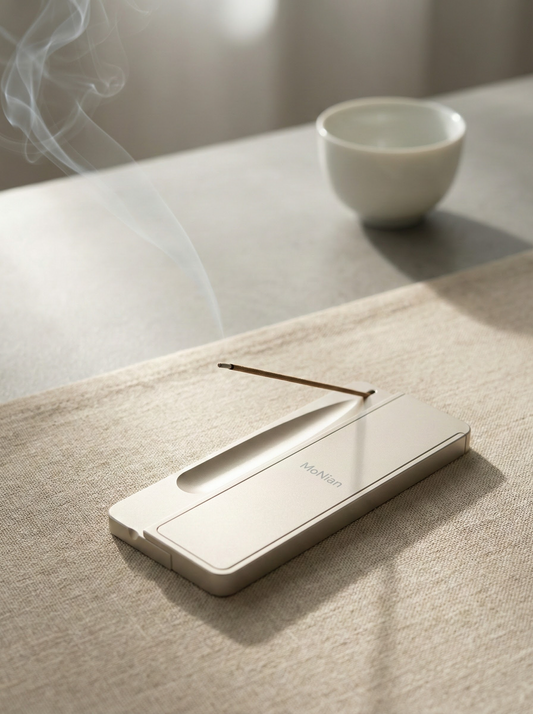
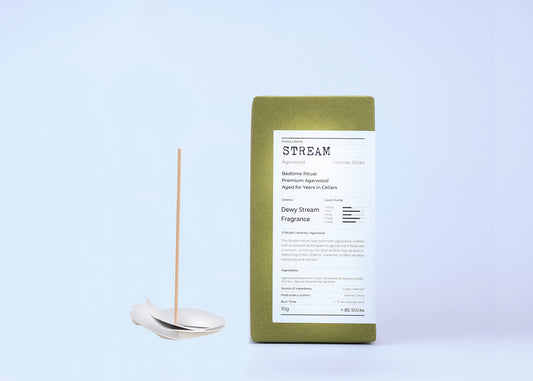
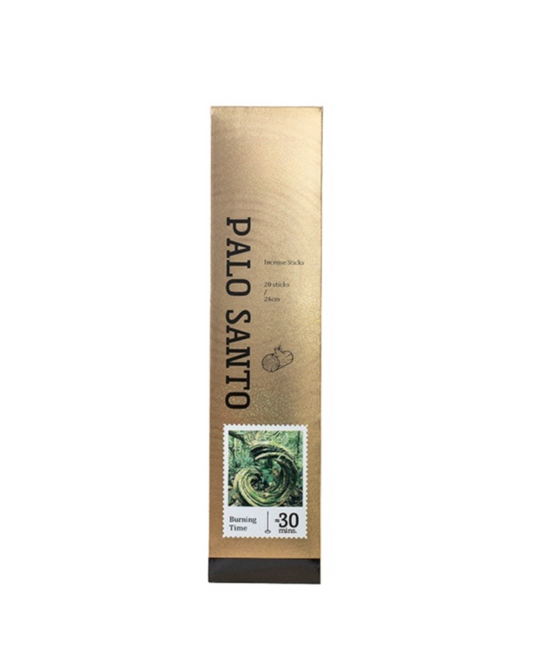
If you want a consistent, travel-friendly setup, a dedicated holder and storage system makes it easier to keep sessions short, safe, and intentional.
Shop the Rituals BoxFAQ: Incense for Anxiety
Does incense actually reduce anxiety, or is it placebo?
Incense is not a treatment for anxiety disorders, but scent can measurably influence stress physiology through direct olfactory-limbic pathways. For many people, the benefit is a reliable “downshift cue” when paired with breathing and a short ritual.
How long should I burn incense for stress relief?
Most people only need a brief session (about 3–5 minutes) to get the sensory signal. Longer burning increases smoke exposure without necessarily improving the calming effect.
Which incense is best for relaxation?
Lavender, cedarwood/pine, and sandalwood are commonly studied aromatic profiles, but preference matters. If you dislike a scent, it is less likely to promote parasympathetic activation for you.
Can incense make anxiety worse?
Yes, if smoke, strong odor, or certain notes trigger headaches, nausea, asthma symptoms, or negative associations. Start with short sessions, good ventilation, and stop if you feel worse.
Is incense safe to use every day?
Daily use can be reasonable when kept brief and well-ventilated, but safety depends on sensitivity, room size, ventilation quality, and total smoke exposure. When in doubt, reduce frequency or use lower-smoke options.
References
- Harvard-related interview/explainer on the olfactory system’s direct links to emotion and memory (Venkatesh Murthy). Academic background reading: https://pubmed.ncbi.nlm.nih.gov/?term=olfactory%20bulb%20amygdala%20hippocampus%20emotion%20memory
- Scientific Reports (2024) — aromatherapy and parasympathetic activity/HRV recovery. PubMed topic entry: https://pubmed.ncbi.nlm.nih.gov/?term=Scientific%20Reports%202024%20aromatherapy%20heart%20rate%20variability%20parasympathetic
- Sandalwood odor components (α-santalol/β-santalol) and relaxation/alertness research. PubMed topic entry: https://pubmed.ncbi.nlm.nih.gov/?term=alpha-santalol%20beta-santalol%20relaxation%20alertness
- Iranian Journal of Nursing and Midwifery Research (2016) — lavender inhalation and cortisol. PubMed topic entry: https://pubmed.ncbi.nlm.nih.gov/?term=Iranian%20Journal%20of%20Nursing%20and%20Midwifery%20Research%202016%20lavender%20inhalation%20cortisol
- α-Pinene and parasympathetic activity research. PubMed topic entry: https://pubmed.ncbi.nlm.nih.gov/?term=alpha-pinene%20parasympathetic%20activity
Tags:
Previous
Hotel Room Hacks: The 15-Minute "Room Reset" Ritual
Next
The Silent Language of Smoke: Why Three Incense Sticks in Chinese Tradition