
Incense and Candle: The Architecture of Stillness
Incense and Candle: The Architecture of Stillness
While candles offer the warmth of horizontal comfort, incense provides the vertical ascent of presence, bridging the gap between ancient Asian traditions and modern Western mindfulness.
Reading Guide
The Vertical and The Horizontal
If you observe the burning of a candle and a stick of incense side by side, you will notice a fundamental difference in their nature. The candle is anchored in light and heat; it radiates outward, creating a circle of warmth. It is horizontal, embracing the space around it. The incense, however, is defined by its smoke. It rises. It is vertical, drawing the eye and the mind upward, creating a bridge between the tangible ground and the intangible air.
This distinction is not merely physical; it is the essence of why these two forms of fragrance have diverged in their cultural journeys. For centuries, the West has sought the comfort of the hearth—the candle's light. The East has sought the clarity of the sky—the incense's smoke. Today, as we seek to reclaim our state of presence in a distracted world, understanding this difference allows us to choose the right tool for our own return to stillness.
Why Asia Chooses Smoke Over Flame
In the tapestry of Asian culture, the preference for incense over candles is not a matter of aesthetics, but of function. For thousands of years, the act of burning incense has been a deliberate method of communication.
"The rising smoke is viewed as a messenger. In traditional understanding, it carries intentions, gratitude, and prayers from the human realm to the ancestral or divine realms." — Traditional Asian Perspective
A candle may illuminate a shrine, but it is the incense that activates it. This "verticality" makes incense the primary tool for connection—not just with the external divine, but with one's internal state of clarity. Furthermore, the scent of incense is often designed to be more complex and lingering than that of a candle. It is meant to permeate a space, cleansing it of stagnation. In many Asian households, lighting incense is the first act of the day—a ritual of "Boundary" setting that marks the transition from sleep to wakefulness, from chaos to order.
A History of Presence: Incense in Asian Culture
The history of incense in Asia is a chronicle of refinement. It began not as a luxury, but as a necessity for preservation and purification.
The Roots of Ritual
Over 2,000 years ago, during the Han Dynasty in China, incense evolved from simple burning of herbs to a sophisticated art form. It was integrated into the daily lives of scholars and monks alike. The "Four Arts of the Chinese Scholar" often included the appreciation of incense, alongside tea, painting, and flower arrangement. It was a tool for "Rebalance"—used to steady the mind before writing poetry or making governance decisions.
The Way of Fragrance
In Japan, this appreciation was codified into Kodo (The Way of Fragrance). Unlike the Western approach of "smelling" a scent, practitioners of Kodo "listen" to the incense. This linguistic shift reveals a profound difference: listening requires a quiet mind and active attention. It is a practice of "Permission"—allowing the scent to reveal itself, rather than consuming it.
Crossing the Pacific: Incense in America
The journey of incense to the American continent is a story of two distinct waves, each carrying a different meaning.
The Counterculture Wave
The first significant introduction of incense to the broader American public occurred in the 1960s and 70s. It arrived not through scholars, but through the counterculture movement. For the "hippie" generation, incense—often heavy with patchouli and sandalwood—became a symbol of rebellion against sterile Western materialism. It was a badge of the "Mystical East," used to mask other scents or to signal an affinity with alternative lifestyles.
The Mindfulness Wave
The second wave is happening now. As yoga and meditation have moved from the fringe to the mainstream, incense has been reintroduced as a tool for wellness. It is no longer just about "vibes"; it is about mental health. Americans are beginning to use incense much like their Asian counterparts—as a timer for meditation, a trigger for focus, and a way to demarcate space in a work-from-home era.
Modern Rituals: Functional vs. Intentional
Today, the distinction between American and Asian usage is blurring, yet differences remain in the intent behind the act.
The Asian Approach: Anchoring
- Intentional Exit: Lighting incense is an active "Exit" from the mundane.
- Focal Point: The scent serves as an anchor for the wandering mind.
- Signal: It signals that a specific mental state is being invoked, not just background noise.
In contrast, the Western approach often uses incense and candles to "set the mood." The goal is frequently relaxation or romance—a horizontal expansion of comfort. The scent is a backdrop, a passive element that enhances a bath or a dinner party. It is functional, serving the environment.
Comparison: Which Anchor Suits Your Space?
| Feature | Incense | Candle |
|---|---|---|
| Primary Element | Smoke (Air/Ether) | Flame (Fire) |
| Direction | Vertical (Ascending) | Horizontal (Radiating) |
| Primary Function | Focus, Cleansing, Ritual | Ambiance, Warmth, Light |
| Scent Profile | Earthy, Woody, Complex | Sweet, Floral, Waxy |
| Duration | Fixed (Timekeeper) | Variable (Hours) |
| Best For | Meditation, Work, Morning | Bath, Dinner, Evening |
Frequently Asked Questions
Is incense smoke harmful to breathe?
Like any smoke, moderation is key. High-quality, natural incense (like those used in Monian rituals) produces cleaner smoke than synthetic varieties. Always ensure your space has gentle airflow.
Can I use incense if I don't meditate?
Absolutely. Incense is a tool for "Rebalance." You can use it to mark the start of your workday, to clear the air after cooking, or simply to enjoy a moment of stillness with a cup of tea.
Why does Japanese incense have no bamboo stick?
Japanese incense is typically pure compressed material. This results in a cleaner scent profile with less smoke, as you are not burning a wood core—ideal for smaller spaces or those sensitive to smoke.
How do I extinguish incense properly?
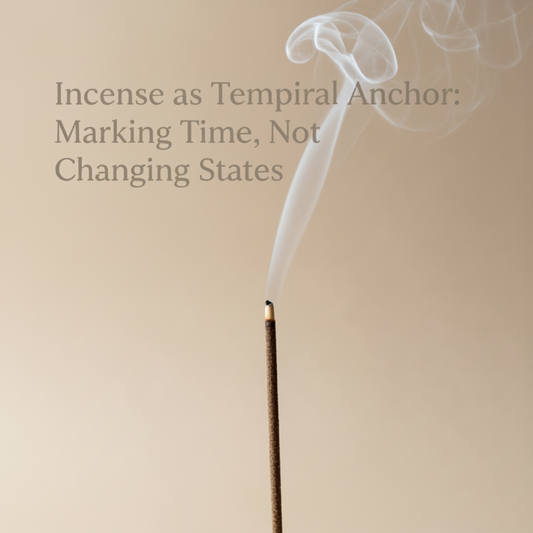
Ideally, you let it burn to completion—it is designed as a time unit. If you must stop, gently press the burning tip against a heat-safe surface or break off the lit end.
Purify Your Space
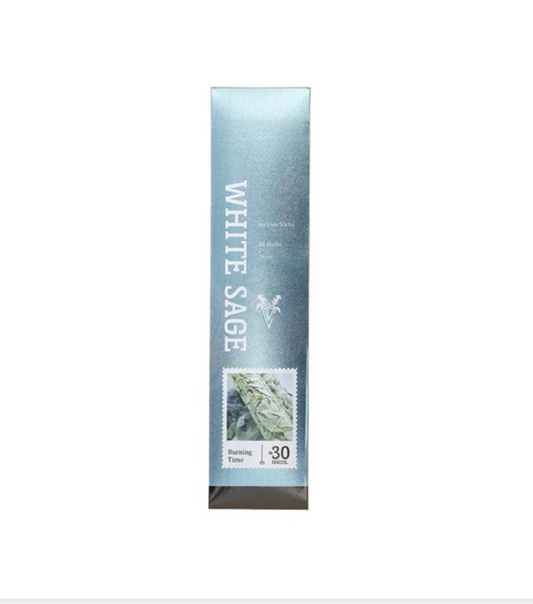
Handcrafted from authentic Peruvian White Sage, these bamboo-less sticks offer a pure, grounding aroma for your daily rituals of presence.
Experience White SageReferences
- Memoricall. (n.d.). Is Incense Better Than Candle? Full Comparison Guide. Retrieved from memoricall.com
- Delta Brand. (n.d.). The History and Cultural Significance of Incense Across Different Traditions. Retrieved from deltabrand.com
- Bokksu. (2026). Japanese Candles, Incense, and Snacks: A Cozy Ritual for the Cold Season. Retrieved from bokksu.com
Tags:
Previous
How Scent Affects Your Mind: The Neuroscience of Incense and Stress
Next
Incense as Temporal Anchor: Marking Time, Not Changing States | Monian