
Why Do Chinese Use 45ml Small Teacups? The Fact Behind Tradition
The 45ml teacup is not a design accident but a refined result of thousands of years of Chinese tea culture, philosophy, and practical wisdom—a vessel that embodies the principle that 'less is more' and transforms every sip into a moment of mindfulness and connection.
What You'll Discover:
If you've ever shared tea with a traditional Chinese family or visited a Gongfu tea house, you've likely encountered a moment of delightful confusion. You're presented with a teacup so small it could be mistaken for a doll's accessory. You might wonder, "How is anyone supposed to quench their thirst with this?" This question, however, misses the point entirely. The small teacup isn't about quenching thirst; it's about savoring flavor, honoring tradition, and engaging in a ritual that is centuries old. So, why are these cups so tiny? The answer is a fascinating journey through history, philosophy, and the very art of tasting.
The Historical Journey: From Large Bowls to Tiny Cups
The teacup didn't start small. Like many things, it evolved, shrinking over centuries as tea culture became more refined. This evolution can be traced through China's great dynasties.
| Dynasty | Era | Teacup Characteristics & Tea Culture |
|---|---|---|
| Tang Dynasty | 618-907 CE | Tea was often boiled with spices and served in large, functional bowls. The focus was on tea's medicinal and stimulating properties. |
| Song Dynasty | 960-1279 CE | The era of "Doucha" (斗茶), or tea competitions. Powdered tea was whisked into a froth. Dark-glazed bowls were favored to showcase the white foam, and the size began to shrink to better concentrate the aroma and flavor. |
| Ming Dynasty | 1368-1644 CE | This was the turning point. The first Ming emperor banned compressed tea cakes, popularizing loose-leaf tea. This shift required a new way of brewing—steeping. Small, delicate porcelain cups, especially from Jingdezhen, became the vessel of choice to appreciate the clear liquor and complex aromas of loose-leaf tea. |
| Qing Dynasty | 1644-1912 CE | Gongfu Cha (功夫茶), the "skillful way of tea," was perfected. The small cup, now around 30-50ml, became the undisputed standard. It was no longer just a vessel but an essential tool for the ritual. |
A Tale of Two Emperors: The Song Dynasty's Emperor Huizong, a renowned artist, wrote the "Treatise on Tea," detailing the aesthetics of tea whisking and the importance of the vessel. Centuries later, the Qing Dynasty's Emperor Qianlong, a passionate tea connoisseur, is said to have standardized the small cup during his travels, demanding a size that perfectly balanced heat retention, aroma concentration, and aesthetic grace. The 45ml cup is a direct descendant of this imperial preference.
The Philosophy of Smallness: Why Less is More
The small teacup is a physical manifestation of profound philosophical principles that are deeply embedded in Chinese culture.
Taoism: Embracing Simplicity
Taoist philosophy values simplicity and finding the universe in the particular. The small cup embodies this. It forces you to focus on the essence of the tea, not the quantity. In its smallness, it contains a world of flavor, aroma, and warmth—a microcosm of the Tao itself.
Buddhism: The Practice of Mindfulness
For Zen Buddhists, tea became a form of meditation. The small cup is a tool for mindfulness. Each small, deliberate sip is a complete sensory experience, a moment to be fully present. You cannot rush a small cup of tea. It commands your attention, making the act of drinking a practice of "here and now."
Confucianism: The Ritual of Respect
Confucianism emphasizes ritual (礼, lǐ) and social harmony. In a Gongfu tea ceremony, the small cups facilitate a shared experience. The host constantly refills the cups for the guests, a gesture of continuous care and respect. This act of serving and receiving builds connection and reinforces social bonds.

The Art of Tasting: Practical Wisdom in a Small Cup
Beyond philosophy, the small cup is a masterclass in practical design, engineered to deliver the best possible tea-tasting experience.
- Concentrates the Aroma: A small cup brings your nose closer to the tea's surface, concentrating the volatile aromatic compounds. The first and most important step in tasting tea is smelling it. A small cup makes this initial "fragrance appreciation" far more intense and revealing.
- Maintains Optimal Temperature: Tea is incredibly sensitive to temperature. A large cup allows the tea to cool too quickly, causing the flavor profile to flatten. A small cup is finished in one or two sips, ensuring that every drop is consumed at the perfect temperature to reveal its full complexity.
- Reveals the Evolution of Flavor: Gongfu tea involves multiple, short infusions. The first steep might be light and floral, the third rich and robust, the fifth sweet and lingering. The small cup allows you to appreciate the distinct character of each infusion, tasting the tea as it "opens up" and evolves. With a large cup, all these nuances would be blended and lost.
- Encourages Quality over Quantity: Because you are focusing on small, concentrated amounts, you are naturally inclined to use higher quality tea leaves. The small cup is designed for savoring precious, complex teas, not for chugging down a mediocre brew.
The Science Behind the Sip: Why Size Affects Taste
Modern science is beginning to validate what tea masters have known for centuries. The size and shape of a vessel have a measurable impact on our perception of taste and aroma.
- Aromatics and Olfactory Receptors: The narrow opening of a small cup funnels aromas directly to your olfactory receptors, enhancing the perception of flavor. Much of what we call "taste" is actually smell, and the small cup is an aroma-delivery system.
- The Psychology of Scarcity: When something is served in a small portion, our brain perceives it as more valuable and complex. This psychological effect encourages us to pay closer attention, leading to a richer tasting experience.
- Thermal Dynamics: The high surface-area-to-volume ratio of a small amount of liquid means it cools at a predictable rate. The ritual of constant refilling ensures the tea is always within the optimal temperature range (typically 60-70°C) for tasting, where our taste buds are most receptive to complex flavors.

How to Choose Your Perfect Master Teacup
Embracing the small cup tradition begins with choosing the right vessel. The 45ml capacity is widely considered the "golden standard" for a master teacup—large enough to provide a satisfying sip, yet small enough to concentrate aroma and maintain temperature.
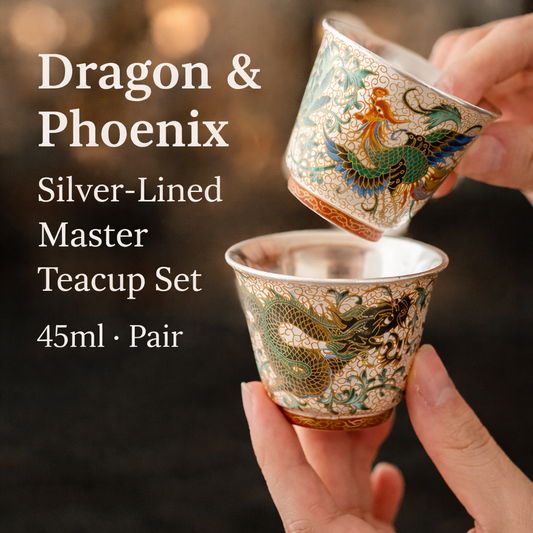
But it's not just about size. It's about craftsmanship, material, and meaning. A true master teacup should feel good in your hand, enhance the color of the tea, and carry a story. This is where the 45ml Dragon & Phoenix Silver-Lined Master Teacup Set excels. It is the perfect embodiment of everything we've discussed:
- The Perfect Size: At 45ml, it adheres to the Gongfu tradition, designed for savoring, not gulping.
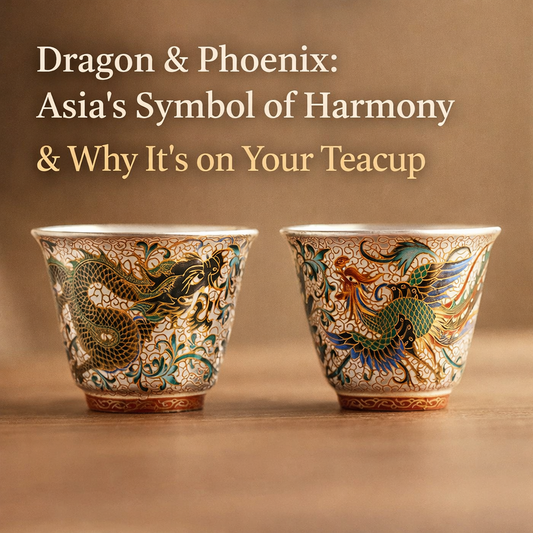
- Historical Symbolism: The Dragon and Phoenix motifs connect you to the deep cultural and philosophical roots of Chinese art and tea culture.
- Superior Craftsmanship: The cloisonné-style enamel is a nod to imperial artistry, while the silver-lining serves a critical function—it reflects the tea's true color and purifies the taste, allowing for the most authentic experience.
- A Ritual in a Box: The set of two cups is designed for sharing, immediately inviting you to practice the Confucian principle of hospitality and connection.

Experience the Wisdom of the Small Cup
Are you ready to transform your tea practice? To move from simply drinking tea to truly experiencing it? The journey begins with the right vessel. Our 45ml Dragon & Phoenix Silver-Lined Master Teacup Set is more than just a pair of beautiful cups; it is an invitation to a slower, more mindful way of life.
Embrace a tradition perfected over centuries. Discover flavors in your favorite tea that you never knew existed. Share a moment of true connection. This is the power of the small cup.
Discover Your Master Teacup SetFrequently Asked Questions
Q1: Is it practical to use such a small cup for daily drinking?
It depends on your goal. If your goal is hydration, a larger mug is more practical. If your goal is to savor high-quality tea, relax, and engage in a mindful ritual, the small cup is not only practical but essential.
Q2: Does the material of the teacup matter?
Absolutely. Porcelain is the most favored material because it is non-porous and doesn't absorb the tea's flavor, ensuring a pure taste. The silver lining in our Dragon & Phoenix set further enhances this by softening the water and reflecting the tea's true color.
Q3: Can I use a small teacup for any type of tea?
Yes, but they are especially suited for oolongs, pu-erhs, and high-grade black and green teas, whose complex flavors evolve over multiple infusions. The small cup is the key to unlocking these layers.
Q4: Why does the set come with two cups?
This honors the tradition of sharing tea. It's designed for a host and a guest, or any two people sharing a moment. It embodies the social and connective aspect of tea culture.
Tags:
Previous
The Dragon & Phoenix Teacup Set: Ancient Symbolism Meets Modern Tea Culture | MONIAN
Next
Master Teacup Myths Debunked: Your Guide to Quality, Value, and Care | MONIAN