How to Use Incense in Chinese Rituals: A Guide to Ancient Practices
In traditional Chinese culture, incense rituals are a sacred practice used to communicate with deities, purify the mind, and honor ancestors, with specific procedures in Taoism and Buddhism that reflect their distinct philosophies.
What You'll Discover:
Let's journey back in time to uncover the sacred traditions of incense in China. Far more than just a fragrant stick, incense is a spiritual key, unlocking communication with the heavens, expressing deep reverence, and enabling a profound sense of spiritual cleansing. As Taoism and Buddhism wove themselves into the fabric of Chinese society, they each gave incense a unique voice and purpose. This guide explores the history, meaning, and practice of these ancient incense rituals.
The Ancient Origins of Incense Burning
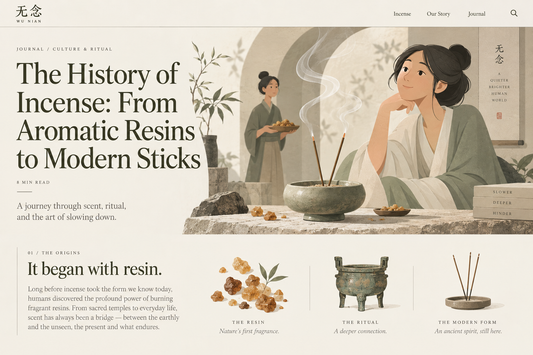
The story of incense begins with the ancient 'fanji' (燔祭) ritual, where people burned wood or plants, believing the smoke carried their prayers to the gods. This simple act of worship laid the groundwork for a rich and complex incense culture. As new aromatics like sandalwood and agarwood arrived via the Silk Road and incense-making evolved, it transformed from a simple smoke signal into a sophisticated offering, rich with fragrance and meaning.
Incense in Taoist Rituals: A Bridge to the Divine
In Taoism, China's indigenous religion, incense is the sacred bridge between our world and the realm of the immortals. The fragrant smoke is a vessel, carrying the heartfelt wishes of devotees seeking blessings and harmony with the Tao.
Historical Development and Core Significance
From its roots in ancient shamanic practices, incense burning became a cornerstone of Taoist ceremony. By the Han Dynasty, it was used to call upon and honor spirits. Later, during the Wei and Jin Dynasties, it became an essential tool for both grand ceremonies and personal cultivation, helping practitioners purify sacred spaces and ward off negative energies. The core meaning of incense in Taoism is multi-layered:
- A Divine Messenger: The smoke is a direct line to the heavens, carrying prayers to the deities.
- A Purifying Agent: The calming aroma cleanses the mind and body, creating a serene environment for spiritual practice.
- An Act of Reverence: Burning incense is a profound sign of respect for deities and ancestors, reflecting the core idea that humanity and nature are one (`天人合一`).
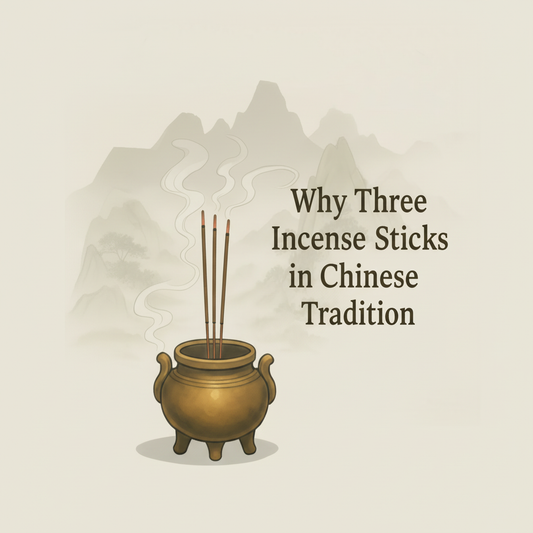
Typically, Taoists burn three sticks of incense, a symbolic offering to the 'Three Treasures' (三寶): the Tao (the way), the Scriptures (the teachings), and the Master (the guide).
Taoist Incense Rituals and Regulations
To ensure the solemnity of the ceremony, Taoist rituals follow a clear protocol:
- Select the Incense: Choose three sticks of high-quality, natural incense. They must be intact.
- Light the Incense: Hold the sticks in your left hand, tips pointing down, and light them. If a flame appears, gently wave the sticks or fan it with your hand. Never blow it out with your mouth, as breath is considered impure and disrespectful.
- Hold the Incense: Raise the lit incense to your forehead with both hands and bow respectfully. The left hand, considered the pure hand, should be the primary hand holding the incense.
- Place the Incense: Insert the sticks into the censer in a specific order: first the center stick (for the Tao), then the stick on your left (for the Scriptures), and finally the stick on your right (for the Master). Ensure they stand upright.

Incense in Buddhist Rituals: A Path to Mindfulness
When Buddhism arrived in China, it embraced and adapted local incense practices. In Buddhism, incense is both a supreme offering and a powerful tool for the mind, used to cultivate a state of peace and deep focus, making it the perfect incense for meditation.
Historical Development and Core Significance
Originating in India to purify the air and aid concentration, incense quickly became a central part of Buddhist worship in China. The fragrance helps create a pure, solemn atmosphere for Buddhas and Bodhisattvas, while also guiding the practitioner's mind away from distractions. Buddhist scriptures speak of the "true incense of precepts and samadhi" (`戒定真香`), linking the physical scent to the inner cultivation of morality, concentration, and wisdom. It serves as a beautiful reminder to practice mindfulness. Like Taoists, Buddhists also typically use three sticks to honor the 'Triple Gem' (三寶): the Buddha, the Dharma (teachings), and the Sangha (community).
Buddhist Incense Rituals and Regulations
Buddhist rituals are often simpler, emphasizing the sincerity of the heart:
- Lighting: Light the incense and, if a flame appears, gently fan it out.
- Holding: Hold the incense with both hands at forehead level, palms together, and silently recite prayers or the Buddha's name.
- Placing: Place the three sticks upright in the censer as an offering.
- Sincerity is Key: Buddhism teaches that the power of the ritual comes from a pure and reverent heart, not the quantity of incense burned.

Taoism vs. Buddhism: A Comparison of Incense Practices
While both traditions see incense as a tool for purification and reverence, their focus differs. The following table highlights their key distinctions:
| Feature | Taoist Incense Rituals | Buddhist Incense Rituals |
|---|---|---|
| Core Purpose | Communicating with deities, seeking blessings | Offering to the Triple Gem, purifying the mind |
| Number of Sticks | 3 (for Tao, Scriptures, Master) | 3 (for Buddha, Dharma, Sangha) |
| Key Concept | Bridge to the divine (`天人合一`) | Aid for cultivation (`戒定真香`) |
| Ritual Focus | Strict procedures and incantations | Sincerity of heart over rigid rules |
How to Create Your Own Incense Ritual for Meditation and Peace
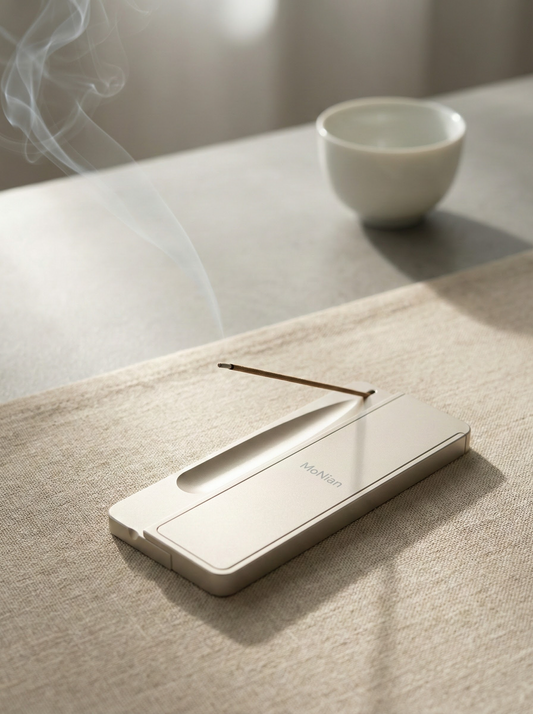
You don't need to be a monk to benefit from the calming power of incense. Creating a simple, personal ritual can be a beautiful way to find a moment of incense for peace in your busy life. Here's how:
- Choose Your Incense: Select a scent that resonates with you. For relaxation and meditation, sandalwood or agarwood are excellent choices. Opt for natural incense to ensure a pure, clean burn without synthetic additives.
- Set Your Intention: What do you hope to achieve? Whether it's clarity, calm, or gratitude, hold this intention in your mind.
- Create a Sacred Space: Find a quiet corner. You might place your censer on a small table with a candle or a meaningful object.
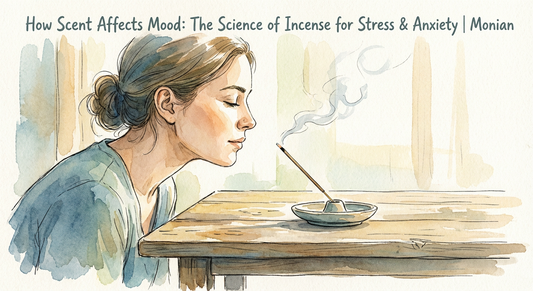
- Light and Observe: Light your incense stick. As the fragrant smoke begins to rise, take a few deep breaths. Watch the smoke dance and allow your mind to settle.
- Meditate or Reflect: Close your eyes and focus on your breath, letting the soothing scent anchor your awareness. Remain here for 5-10 minutes, or for as long as feels right.
Frequently Asked Questions (FAQ)
Q1: Why are three incense sticks typically burned?
In both Taoism and Buddhism, the number three is deeply symbolic. For Taoists, it represents the Three Treasures (Tao, Scriptures, Master). For Buddhists, it honors the Triple Gem (Buddha, Dharma, Sangha).
Q2: Why shouldn't you blow out the flame on an incense stick?
In both traditions, human breath is considered impure. Blowing out the flame is seen as disrespectful to the deities and the sacredness of the ritual. The proper way is to fan it out gently with your hand.
Q3: Does the type of censer matter?
While ornate censers are used in temples, a simple, fire-proof holder is all you need for personal practice. Ceramic censers are popular because they are stable, easy to clean, and come in many beautiful designs that can complement your space.
Q4: Is burning incense only for religious purposes?
Not at all! While its roots are in spiritual practice, today, many people use incense for aromatherapy, to create a calming atmosphere, or as part of a mindfulness practice to de-stress and find focus.
Q5: What are the main differences in the rituals between Taoism and Buddhism?
The biggest difference is the focus. Taoist rituals often involve more specific procedures and incantations aimed at communicating with deities, while Buddhist rituals prioritize the inner state of sincerity and mindfulness.
Q6: What kind of incense is best for beginners interested in meditation?
For beginners, starting with a classic, high-quality natural incense like sandalwood is a wonderful choice. Its earthy, warm aroma is known to calm the mind and reduce anxiety, making it an ideal incense for meditation. Explore our handcrafted, natural incense collections to find the perfect scent for your practice.
Tags:
Previous
Why Do You Sometimes Feel Dizzy When Burning Incense Sticks?|Monian
Next
Why Do Asians Burn Three Incense Sticks? A Guide to Incense Culture Across Asia