5 Key Elements for Choosing Incense Designed for Meditators | Monian
5 Key Elements for Choosing Incense Designed for Meditators
Meditation is not a battle against thoughts, but the construction of a space where stillness can inhabit. In a world of digital distraction, the right scent serves as an invisible anchor, bypassing the logical mind to trigger immediate presence. But not all incense is created equal.
Reading Guide:
As explored in The Architecture of Awareness, scent is the only sense that travels directly to the limbic system—the brain's emotional center—without passing through the thalamus. This biological shortcut makes Incense for Meditation a powerful tool for hacking the distracted mind. However, to truly support your practice, your incense must meet five critical criteria.
1. The "Alert Calm" Ingredient Profile
The most common mistake meditators make is choosing a scent that is either too sedative or too stimulating. Lavender, for example, is excellent for sleep but can lead to drowsiness (torpor) during meditation. Citrus scents, conversely, can trigger the sympathetic nervous system, leading to agitation.
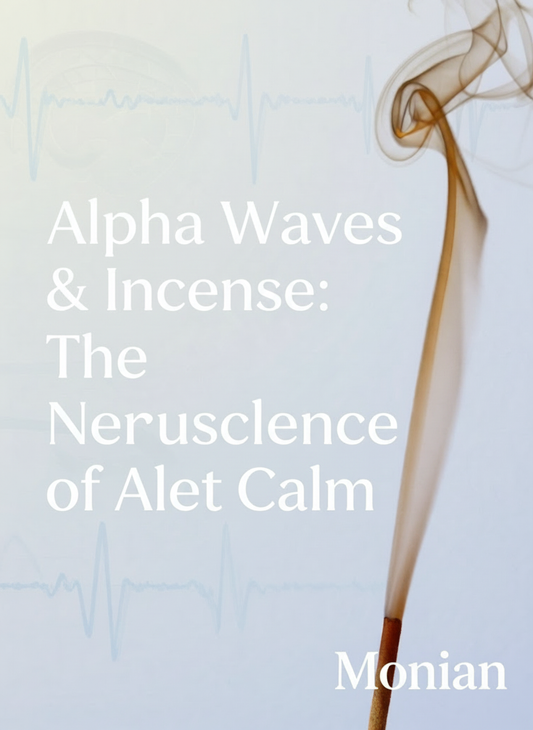
The "Goldilocks Zone" for meditation is Alert Calm—a state characterized by Alpha brain waves. Research confirms that specific wood resins like Sandalwood and Palo Santo are unique in their ability to ground the body while keeping the mind sharp.
"Sandalwood oil has been shown to increase alpha wave activity and reduce beta wave activity, promoting a state of relaxed attentiveness ideal for meditation." — The Science of Incense for Stress & Anxiety
2. Purity of Smoke for Deep Breathing
Deep breathing (Pranayama) is the foundation of almost all meditation techniques. Therefore, the quality of the air you inhale is non-negotiable. Many mass-market incense sticks use synthetic fragrances and chemical binders (like saltpeter) to ensure an even burn. These release particulate matter that can irritate the respiratory tract and disrupt your breath.
Natural Incense is defined by what it lacks: no synthetic oils, no charcoal, and often no bamboo core (in the Japanese tradition). This ensures that the smoke is "clean"—a vehicle for scent, not a pollutant.
3. The Burn Time as an Analog Timer
Nothing shatters a meditative state faster than the jarring digital alarm of a smartphone. In ancient traditions, incense served as a "stick of time." By choosing an incense with a known burn duration (e.g., 30 or 45 minutes), you can externalize the time-keeping process.
This allows your practice to end naturally as the scent fades, creating a gentle transition back to the world. As discussed in The Architecture of Stillness, this shifts your experience of time from "horizontal" (linear, anxious) to "vertical" (present, deep).
4. Scent Complexity for "Listening"
In the Japanese practice of Kodo (The Way of Fragrance), one does not "smell" incense; one "listens" to it. This linguistic shift points to a profound truth: complex, natural scents engage the mind.
Monotonal Scents
Example: Synthetic Strawberry Effect: The brain processes it quickly and gets bored, leading to mind-wandering.
Complex Scents
Example: Aged Sandalwood / Palo Santo Effect: Unfolds in layers (top, middle, base notes), providing a dynamic anchor for attention.
5. The Energy of Origin
Meditation is an exchange of energy. The "vibe" of the tools you use matters. Incense made in a factory with exploitative labor practices carries a different energetic weight than incense handcrafted by artisans using sustainable methods.
When you light a stick of ethically sourced Palo Santo or Sandalwood, you are connecting to a lineage of respect—for the earth, for the craft, and for the ritual itself.
The Beginner's Best Anchor
Handcrafted from sustainable holy wood, offering a clean, complex aroma that naturally times your session to 30 minutes of deep presence.
Palo Santo Incense Sticks - Handcrafted Sacred Wood Aroma
Experience the Anchor
Tags:
Previous
What Is Oud? Agarwood, Aroma, and Fragrance Culture
Next
Incense and Meditation: The Architecture of Awareness
Related articles